
What masonry really costs.
Commonly published planning ranges by project type, a calculator for brick counts and mortar bags, and what moves the price. Your written estimate sets the real number.
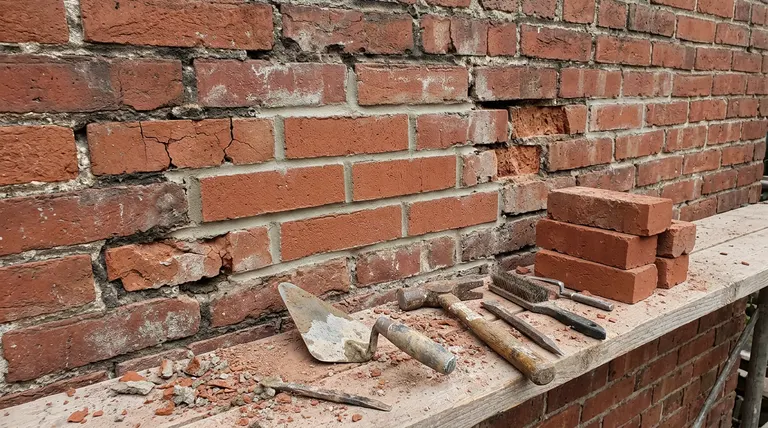
Size up your project in thirty seconds.
Choose a project, enter length and height and see brick counts, mortar bags and a planning range for Nashville-area work.
Describe the project
Openings such as windows and doors can be subtracted: enter the net area by lowering the height.
- Brick needed
- Mortar, 80 lb bags
- Typical time
A commonly published planning range, not a quote. Access, brick, details, drainage, footings and permits move the real number. A free visit ends with a written estimate.
Saved. It will travel with your estimate request below.
Typical project cost, side by side.
Dollars for typical installed projects. Bars show the low-to-high range.
Commonly published planning ranges for typical projects. Real prices depend on access, materials, details, footings, drainage and permits.
Seven things that change the number.
Height and access
Second-story walls need scaffolding; tight yards mean hand-carried material.
Brick and stone
Salvaged, custom blends and natural stone cost more than standard units.
Amount that failed
Deep mortar decay takes longer to remove and replace.
Footings and drainage
Walls and patios are only as good as what is underneath.
Details
Arches, soldier courses, corbels and caps add labor.
Permits and approvals
Chimneys, tall walls and HOAs add steps, drawings and fees.
Season and schedule
Rush jobs and winter protection can add cost.
Get your number
A free visit turns all of this into one written price. Ask for my estimate
Ask every mason for these six lines.
- Depth of mortar removal and the mortar type and color
- Brick or stone: where it comes from and how it will be matched
- Footing size, steel, drainage and base preparation
- Flashing, weeps, lintels and caps
- Permits, drawings and HOA submissions
- Cleanup, access equipment and how the cause of damage is handled
Cost questions, answered
How much does tuckpointing cost?
Commonly published planning ranges put tuckpointing at roughly $5 to $25 per square foot of wall, with a typical house often landing between $2,000 and $8,000. Height, access, how much mortar has failed and how well the new mortar must match all move the number, so a free visit and a written estimate are the only way to get your real price.
How long does a masonry project take?
Small repairs can be finished in a day or two. Tuckpointing a house usually takes several days, patios and walks one to three weeks, and chimneys, fireplaces and outdoor kitchens two to eight weeks, depending on permits, cure time and weather. We give you a schedule with the estimate.
Is my chimney worth repairing or should I rebuild it?
If the damage is in the top few courses, the crown or the mortar, a repair is usually enough and costs far less. A leaning, bulging or badly cracked chimney, or one with mortar failure all the way down, usually needs a rebuild. We show you where the damage ends so you can decide with facts.
Do I need a permit for masonry work?
Chimneys, fireplaces, foundations, taller retaining walls and structures often do, and many HOAs require approval for visible changes. We check the rules for your city first and prepare drawings and paperwork where they are needed.
Want a real number for your project?
A free visit ends with a written estimate that lists exactly what is included.